
Overcoming Depression Fatigue: Tips and Strategies
Overcoming Depression Fatigue: Tips and Strategies
Tackling Depression Fatigue: Strategies That Work

If you're wondering how to overcome depression fatigue, the journey starts with understanding the symptoms, causes, and impact of this debilitating cycle. Depression fatigue makes you feel exhausted, with no energy or motivation. This isn't just being tired; it's a deeper level of fatigue that seeps into every part of your life.
Quick steps to fight depression fatigue:
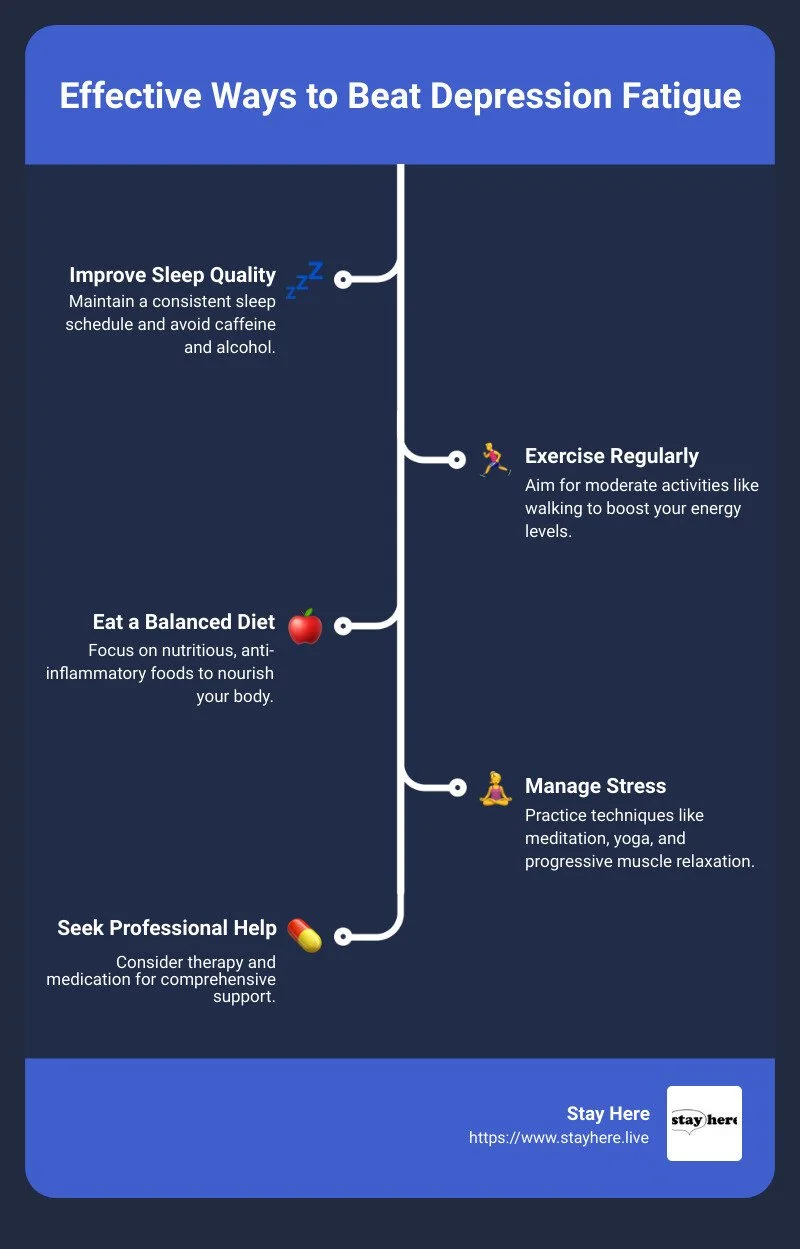
Improve sleep quality: Maintain a consistent sleep schedule.
Exercise regularly: Aim for moderate activities like walking.
Eat a balanced diet: Focus on nutritious, anti-inflammatory foods.
Manage stress: Practice techniques like meditation and yoga.
Seek professional help: Therapy and medication can be life-changing.
Depression and fatigue are closely linked. Problems like insomnia, stress, and poor diet can make the fatigue worse, creating a challenging cycle to break. But understanding these causes is the first step toward reclaiming your energy and well-being.
I'm Jacob Coyne, founder of Stay Here. My work focuses on helping individuals like you overcome mental health challenges. With experience in teaching how to overcome depression fatigue, I'm here to guide you on this journey to better health and happiness.
Understanding Depression Fatigue
Causes of Depression Fatigue
Depression fatigue is a persistent tiredness that affects people with depression. This fatigue can make even the simplest tasks feel impossible. Understanding the causes can help in finding effective solutions.
Sleep Problems
Sleep is crucial for energy and mental clarity. Yet, many people with depression struggle with sleep issues. Insomnia (trouble falling or staying asleep) and hypersomnia (excessive sleep) are common. According to a 2015 study, obstructive sleep apnea is also linked to depression. Treating sleep apnea has been shown to improve depression symptoms.
People with depression often have poor sleep quality. Even if they get enough hours of sleep, they may not feel rested. This lack of restorative sleep contributes to their fatigue.
Diet
What you eat affects your mood and energy levels. Diets high in red and processed meats, refined grains, and sweets can increase the risk of depression. On the other hand, anti-inflammatory foods may reduce this risk. More research is needed, but eating a balanced diet rich in vegetables, whole grains, and healthy fats can help manage depression fatigue.
Stress
Stress impacts the brain's neurotransmitters like serotonin and dopamine, which regulate mood and energy. Life events such as the end of a relationship, the death of a loved one, or financial loss can trigger stress. Stress can also cause inflammation in the body, leading to hypersomnia and fatigue. Managing stress is key to breaking the cycle of depression fatigue.
Medications
Some antidepressants can cause fatigue as a side effect. If you experience this, consult your doctor. They may adjust your medication or suggest alternatives. It's important to find a treatment plan that helps manage both depression and fatigue.
Symptoms of Depression Fatigue
Depression fatigue manifests in various ways. Recognizing these symptoms can help in seeking appropriate treatment.
Low Energy
Feeling tired all the time is a hallmark symptom. This isn't just occasional tiredness; it's a deep, persistent exhaustion that doesn't go away with rest. Many people with depression describe it as running on empty.
Difficulty Concentrating
Depression fatigue can make it hard to focus or think clearly. This mental fog can affect work, school, and daily activities. Simple tasks can feel overwhelming.
Lack of Motivation
People with depression often lose interest in activities they once enjoyed. This lack of motivation can lead to social isolation and further exacerbate feelings of fatigue and sadness.
Muscle Aches
Physical symptoms like muscle aches and pains are also common. These aches can make it even harder to find the energy to move or exercise, creating a vicious cycle of inactivity and fatigue.
Understanding these symptoms and their causes is the first step in learning how to overcome depression fatigue. In the next section, we will explore strategies and tips to help manage and reduce this debilitating condition.
How to Overcome Depression Fatigue
Improve Sleep Quality
Good sleep is crucial for overcoming depression fatigue. Poor sleep can worsen fatigue and make depression harder to manage. Here are some sleep hygiene tips to help you get better rest:
Stick to a consistent sleep schedule: Go to bed and wake up at the same time every day, even on weekends. This helps regulate your body's internal clock.
Avoid caffeine and alcohol: Both can disrupt your sleep patterns. Try to avoid them in the afternoon and evening.
Create a comfortable sleep environment: Keep your bedroom dark, quiet, and cool. Aim for around 65 degrees Fahrenheit. Use blackout curtains, eye masks, or a white noise machine if needed.
Limit screen time before bed: The blue light from screens can interfere with your sleep. Turn off electronics at least 30 minutes before bedtime.
If these strategies don't help, consult your doctor. They may identify underlying issues and recommend further treatments.
Exercise Regularly
Exercise is a powerful tool for combating depression fatigue. It boosts energy levels, improves mood, and helps you sleep better. According to the Centers for Disease Control and Prevention (CDC), 150 minutes of moderate-intensity exercise per week, such as brisk walking, can make a significant difference.
Start small: If you're new to exercise, begin with short, 15-minute walks. Gradually increase the duration as you feel more comfortable.
Mix it up: Incorporate different types of exercise, like yoga, swimming, or cycling, to keep things interesting and target various muscle groups.
Find what you enjoy: Choose activities that you find fun. This makes it easier to stick with your routine.
Eat a Balanced Diet
What you eat can affect your energy levels and mood. A balanced diet helps manage depression fatigue by providing your body with the nutrients it needs.
Focus on nutritious foods: Include plenty of fruits, vegetables, whole grains, and lean proteins in your diet.
Choose anti-inflammatory foods: Foods like berries, fatty fish, and nuts can help reduce inflammation, which is linked to fatigue.
Avoid junk food: Sugary snacks and processed foods can lead to energy crashes and worsen your mood.
Eat small, frequent meals: Instead of three large meals, try eating smaller meals and snacks throughout the day to maintain steady energy levels.
Manage Stress
Stress can exacerbate depression fatigue, but there are ways to manage it effectively:
Meditation and yoga: These practices can help calm your mind and reduce stress. Even a few minutes a day can make a difference.
Progressive muscle relaxation: This technique involves tensing and then relaxing different muscle groups to reduce physical tension and stress.
Mindfulness: Being present in the moment can help you manage stress and improve your overall well-being.
Seek Professional Help
If self-help strategies aren't enough, seeking professional help is crucial. Depression is highly treatable, and many people find relief through therapy and medication.
Talk therapy: Methods like cognitive behavioral therapy (CBT) and behavioral activation (BA) can help you manage depression and its symptoms.
Medication: Antidepressants can be effective for many people. Your doctor will consider your medical history and other factors before prescribing medication.
Consult your doctor: If you're experiencing persistent fatigue and depression, talk to your healthcare provider. They can help you find the right treatment plan.
By implementing these strategies, you can start to manage and reduce depression fatigue. Next, we'll explore self-care strategies to further support your mental health.
Self-Care Strategies
Prioritize Self-Care
Self-care is essential when dealing with depression fatigue. It might feel cliché, but it’s crucial to focus on your own needs.
Mental Breaks: Take regular breaks throughout your day. Step away from stressful tasks to clear your mind. Even a five-minute break can make a big difference.
Positive Self-Talk: Pay attention to how you talk to yourself. Replace negative thoughts with positive affirmations. For example, instead of thinking, "I can't do anything right," try, "I'm doing my best, and that’s enough."
Personal Needs: Listen to your body and mind. If you need rest, give yourself permission to take it. If you need to talk, reach out to someone you trust. Prioritizing your needs helps build resilience against depression fatigue.
Increase Activities Gradually
It can be tough to find the motivation to do anything when you're feeling down. But increasing your activity level slowly can help break the cycle of inactivity and fatigue.
Gentle Activities: Start with small, manageable tasks that bring you joy or a sense of accomplishment. Here are some ideas:
Go for a small walk and smell the flowers along the way.
Watch birds in your local park.
Make a playlist of upbeat music.
Move your body in a way that feels good, like stretching or light yoga.
Research a topic that interests you.
Do a jigsaw or a crossword puzzle.
Make a warm drink and enjoy it.
Light a scented candle and relax.
Rewatch a favorite movie.
Have a spontaneous picnic.
Behavioral Activation: This cognitive behavioral therapy (CBT) technique involves gradually increasing your activities to boost your energy and mood. The theory is that doing things will help give you the energy to do more things.
Small Achievements: Celebrate small wins to build momentum. Completing even minor tasks can provide a sense of accomplishment and motivate you to tackle bigger ones.
Connecting with Loved Ones: Depression can make you feel isolated, but connecting with friends and family can provide emotional support. Reach out to someone you trust and let them know how you’re feeling.
New Hobbies: Engaging in new hobbies can help you express your emotions in a healthy way. Try journaling, painting, drawing, or playing an instrument. These activities can be therapeutic and provide a creative outlet for your feelings.
By incorporating these self-care strategies, you can support your mental health and start to overcome depression fatigue. Next, we'll answer some frequently asked questions about depression fatigue.
Frequently Asked Questions about Depression Fatigue
How to overcome depression fatigue?
Overcoming depression fatigue can be challenging, but there are effective strategies to help manage it. Here are some tips:
Improve Sleep Quality: Prioritize good sleep hygiene. Stick to a consistent sleep schedule, avoid caffeine and alcohol in the evening, and create a comfortable sleep environment. According to the CDC, these steps can improve your sleep quality and reduce fatigue.
Exercise Regularly: Even small amounts of exercise can boost your energy levels and mood. Aim for 150 minutes of moderate-intensity exercise each week, as recommended by the CDC. Activities like walking, jogging, or yoga can be beneficial.
Eat a Balanced Diet: Consuming nutritious foods can help manage depression fatigue. Incorporate anti-inflammatory foods like fruits, vegetables, and whole grains into your diet, and avoid processed foods that can worsen symptoms.
Manage Stress: Practice stress-reduction techniques such as meditation, yoga, or progressive muscle relaxation. Reducing stress can help decrease fatigue and improve your overall well-being.
Seek Professional Help: Talk therapy, such as cognitive behavioral therapy (CBT), and medications like antidepressants can be effective in treating depression and its associated fatigue. Consult a doctor to discuss the best treatment options for you.
Is fatigue a symptom of major depression?
Yes, fatigue is a common symptom of major depression. According to a 2018 report, more than 90% of people with major depressive disorder experience fatigue. This fatigue can manifest as low energy, difficulty concentrating, and a lack of motivation, making daily tasks feel overwhelming.
What stimulants are used for depression fatigue?
Several stimulants can be used to help manage depression fatigue. These include:
Bupropion: An antidepressant that can boost energy levels and improve mood.
Atomoxetine: Commonly used to treat ADHD, it can also help with depression-related fatigue.
Modafinil: A wakefulness-promoting agent often prescribed for narcolepsy, it can also be effective in reducing fatigue in depression.
Psychostimulants: Medications like methylphenidate and amphetamines can also be prescribed to help manage severe fatigue.
It's important to consult with a healthcare provider to determine the best treatment plan for your specific needs.

By understanding these aspects of depression fatigue and implementing these strategies, you can take steps towards managing your symptoms and improving your quality of life.
Conclusion
At Stay Here, we are dedicated to providing comprehensive mental health support to help you steer the challenges of depression fatigue. Our mission is to empower you with the tools and resources needed for healing and hope.
Mental Health Support: We believe in a holistic approach to mental health. This includes practical tips, professional therapy options, and a supportive community. Our ACT Suicide Prevention Training equips leaders and students with the knowledge to identify and respond to signs of suicidal thoughts.
Suicide Prevention: Every 40 seconds, someone loses their life to suicide. Our goal is to change that. Through our partnerships with services like BetterHelp, we offer free therapy sessions to those in need. This ensures that everyone has access to professional help when they need it most.
Hope and Healing: We understand that depression can make the future seem bleak. But remember, there is always hope. By integrating faith-based teachings with practical mental health resources, we create a supportive environment where you can thrive. Whether it's through community activities, mindfulness practices, or simply staying connected with loved ones, every small step can lead to significant improvement.
Your journey to overcoming depression fatigue is unique, but you are not alone. Stay Here is here to support you every step of the way. Together, we can build a brighter future, one where mental health is prioritized, and hope is always within reach.
For more information and resources, visit our ACT Suicide Prevention Training page.
Your story isn't over yet. Let's take this journey together, one step at a time.